APR: A Professional Accreditation Programme, Not a Course


Accreditation in Public Relations (APR) provides practitioners with an opportunity to formally demonstrate to the Institute and their professional peers the breadth and depth of their knowledge, experience, and ethical judgement across the full body of public relations and communications practice.
APR remains a vital component of PRINZ members’ professional growth and is widely regarded as the pinnacle of recognition for a practitioner’s professional standing in Aotearoa.
The APR review committee regularly assesses the current state of the programme and makes recommendations for continuous refinement and improvement.
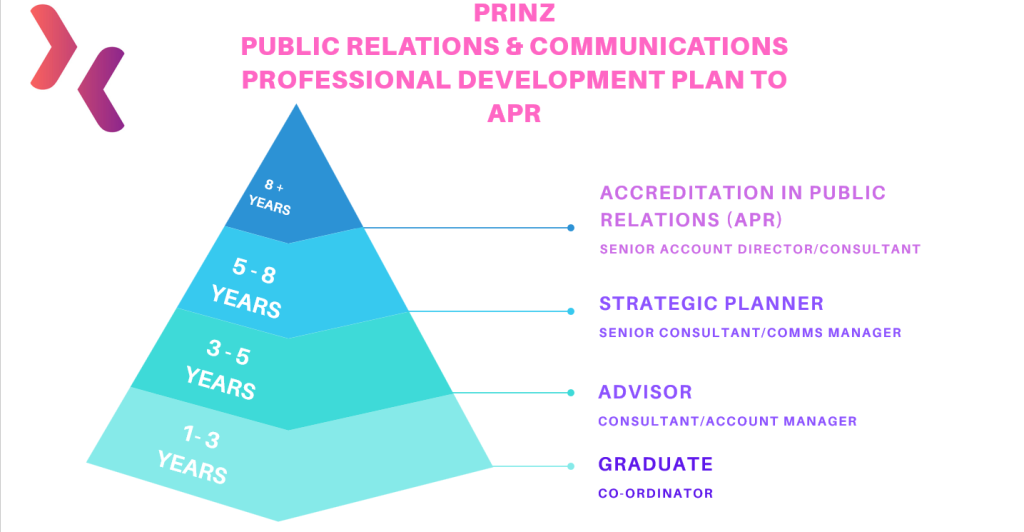
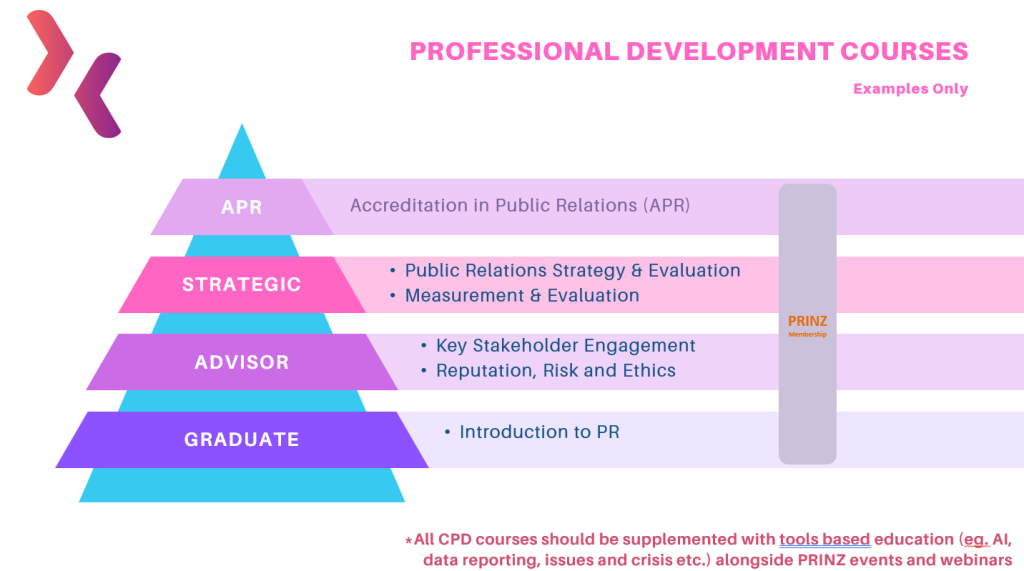
This year their recommendations were refined by the CPD sub-committee and the PRINZ Committee. This resulted in the creation of a clear visual outlining the steps essential to achieve APR accreditation through further professional development.
These steps combine formal learning, including courses and certifications, with sustained professional practice of 8+years throughout a practitioner’s career.
Practitioners must be able to draw on strong examples of projects and leadership experience when completing APR assignments, which is why the depth and length of professional experience is crucial. To support this, the Public Relations Strategy & Evaluation course is a mandatory prerequisite for APR application.
PRINZ and the examiner’s expectation are that practitioners will be acting as “trusted advisors” within their organisations. Strategic thinking and decision-making should be embedded in everything they undertake, both in their current and previous roles with a plan to continue this application throughout their future careers.
Candidates must also submit three projects or case studies during the accreditation programme that demonstrate the practical application of PR and communications disciplines in their professional experience.
The final stage of APR is a viva voce interview with a panel of three senior PRINZ members. This stage places greater emphasis on strategic understanding, with questions such as: what are the key elements of strategy, what constitutes a strategy, and how have you developed one in practice? Candidates should be able to clearly identify and articulate the five to six core components that underpin an effective strategy.
As with everything within our industry body, the Code of Ethics is the foundation of our association, and familiarity with it, along with demonstrated application in a candidate’s experience or theoretical scenarios are a vital component of the programme.
Should you have any questions about whether APR is right for you at this time or to check whether your overseas acquired experience and certifications will be recognised as precursors to APR please contact office@prinz.org.nz